What a Profit & Loss Report Actually Tells You
The Profit & Loss statement — often called a P&L or income statement — is one of the most important reports in your business. Here's how to actually read it.
What is a P&L statement?
A Profit & Loss report shows your business's income and expenses over a specific period of time — usually a month, a quarter, or a year. At the bottom, it tells you whether your business made money (profit) or lost money (a net loss) during that time.
It's not about what's in your bank account right now. It's about what happened during a specific period — what you earned and what you spent.
The three main sections
1. Revenue (Income)
This is the total amount your business earned from its services or products during the period. If you run a cleaning business and invoiced clients $8,000 in March, your revenue for March is $8,000. This is the top line — sometimes called "gross revenue" or "total income."
2. Expenses
These are the costs your business incurred to operate during the same period. Expenses might include supplies, software subscriptions, fuel, advertising, phone bills, and anything else that supports running the business. Each expense category is usually broken out separately so you can see where money is going.
3. Net Profit (or Net Loss)
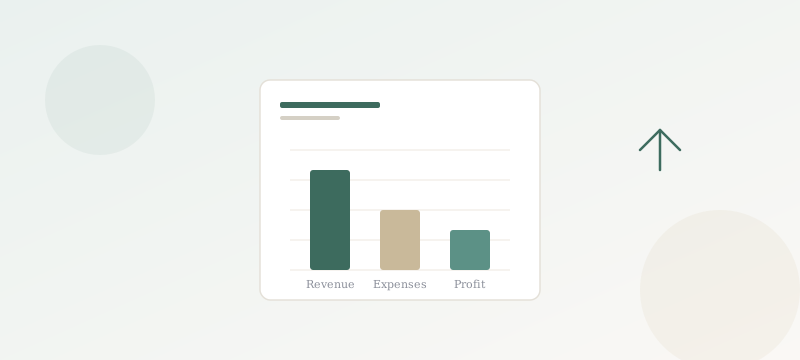
Revenue minus expenses equals your net profit (or net loss). This is what actually matters — not just how much you earned, but how much you kept after paying for everything. A business can have high revenue and still be unprofitable if expenses are out of control.
Simple example: Revenue of $8,000 − Expenses of $3,200 = Net Profit of $4,800. That's what the business actually earned after covering its costs for the month.
Why should you look at it every month?
A monthly P&L lets you spot trends and catch problems early. Are your expenses creeping up while revenue stays flat? Is one service generating most of your profit? Did a particular month underperform, and do you know why?
Without a current P&L, you're making decisions based on how busy you feel — not what the numbers actually show. And busy doesn't always mean profitable.
How to use it as a business owner
- Compare it month to month — are things trending up or down?
- Look at your expense categories — are any growing faster than your income?
- Compare to the same month last year if you have prior records
- Share it with your accountant at year-end — they'll use it to file accurately
Where does it come from?
Your P&L is generated from your bookkeeping records. If your books are current and accurate, the P&L is accurate. If your books are messy or behind, the P&L is unreliable. This is why consistent monthly bookkeeping matters — it's what makes the report actually useful.
Want accurate monthly reports?
Every Anchella Bookkeeping client receives a monthly P&L and Balance Sheet — so you always know where your business stands.
Get a Free Consultation